Proscaf Public Access Ramp Installed by Just Tube
A canal sat between pedestrian traffic and an ongoing construction site.
Construction works changed the normal route, so foot traffic had to be redirected from one side of the canal to the other. The site needed a temporary access method that could keep pedestrians moving without sending them through the construction interface.
Proscaf’s engineering supplied the Proscaf ramp and bridge system design. Just Tube Scaffolding installed it on site.
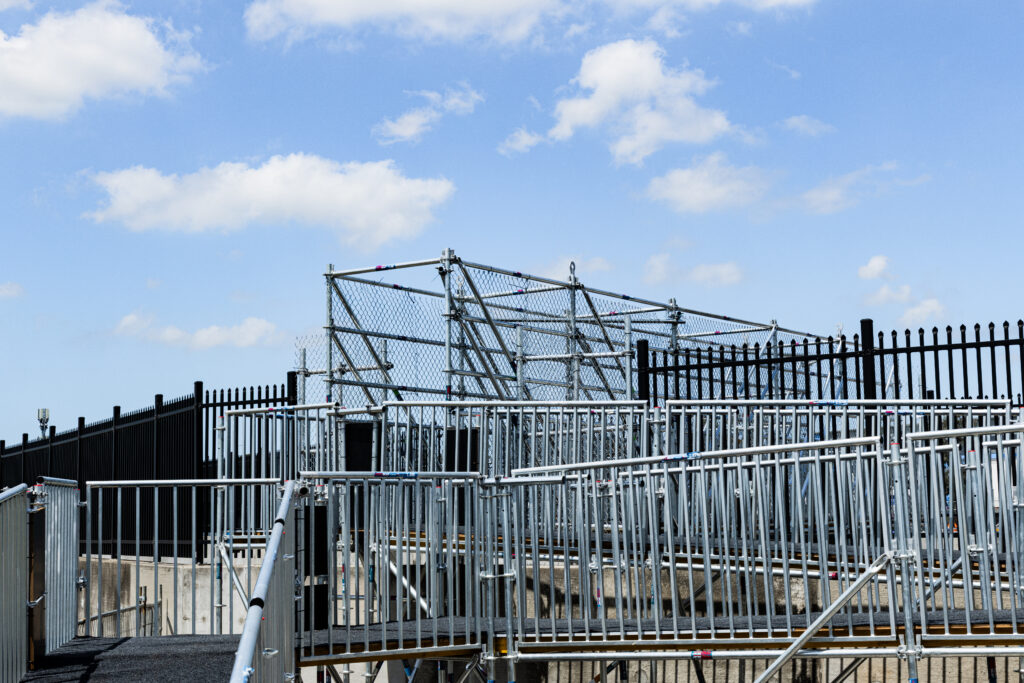
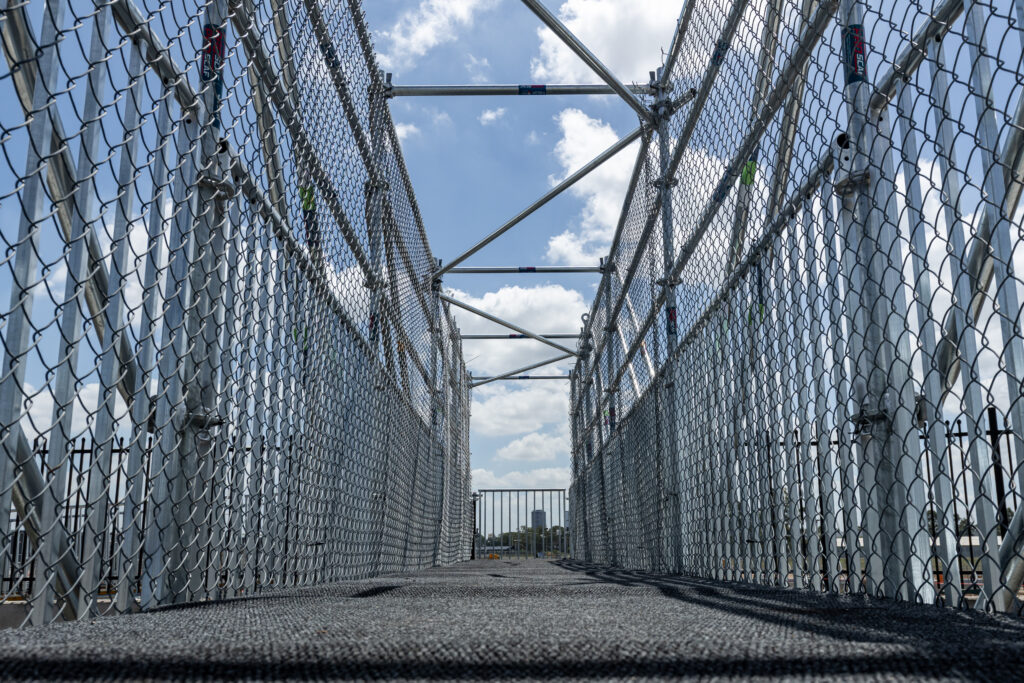
The final layout used a ramp on either side of the canal, connected by a bridge section. This created one continuous public access route across the obstruction.
The bridge section was built on the ground and lifted into position. That method reduced install exposure and meant personnel did not need to enter the canal during the works.
Project Context
The project required a temporary pedestrian access route across a canal.
Pedestrians needed to move from one side of the site to amenities on the opposite side. Construction works affected the existing route, so the project team needed a controlled way to redirect foot traffic.
Proscaf supplied the gear and temporary works engineering support. Just Tube Scaffolding completed the installation.
The access system included two ramps and a bridge section to take pedestrians across the canal and around the construction interface.
The Challenge
Pedestrian movement had to continue while construction works changed the site layout.
Crossing the canal was the direct option, but the install method had to be controlled. Building over a canal can push crews toward exposed work or work from inside the waterway. The project team needed a method that reduced that exposure.
The site requirements were clear:
- Redirect pedestrians from one side of the canal to the other.
- Provide ramp access on both sides.
- Connect the ramps with a bridge section.
- Keep the route away from the construction interface.
- Reduce work over or inside the canal during installation.
- Include public access components such as guardrails.
A standard scaffold build could have addressed part of the issue, but this job needed a cleaner install sequence and fewer components on site.
The Solution
The system used a ramp on each side of the canal, with a bridge section between them. Proscaf’s temporary works engineering team prepared the design and engineering package. The support also covered lifting plans and installation methodology.
Just Tube Scaffolding installed the system on site.
To reduce install exposure, the bridge section was built at ground level before it was lifted into position between the two ramps. Personnel did not need to enter the canal during the install.
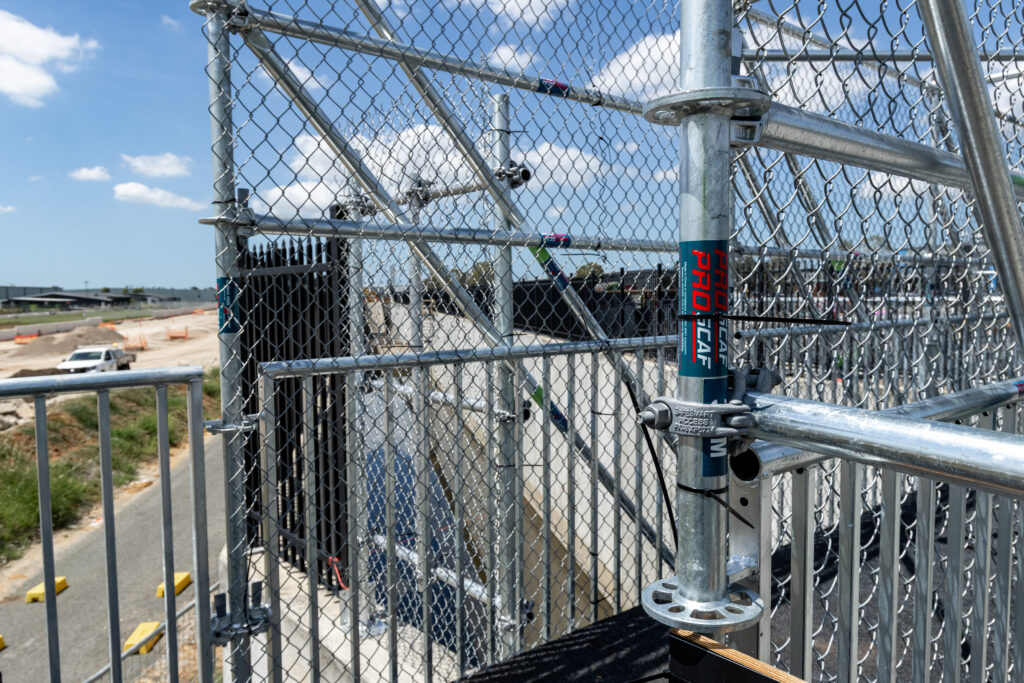
Proscaf suited the job because the rosette connection reduced componentry. The positive diagonal brace connection also meant fewer components were needed to build the access structure.
That helped the installer work through the install with less gear and a more controlled sequence.
Results and Site Benefits
Pedestrian traffic kept moving
The completed route gave pedestrians a defined path across the canal while construction works continued nearby.
Install crews stayed out of the canal
The bridge was assembled on the ground and lifted into position. This removed the need for personnel to enter the canal during installation.
Less componentry on site
The Proscaf rosette connection and positive diagonal brace connection reduced the amount of gear needed for the structure.
A controlled install method
Proscaf provided the design and engineering package, lifting plans and methodology. This gave the install team a clear method before the bridge section was placed.
A practical result for the client
The client was satisfied with the completed system. The access challenge was resolved with a temporary route that suited the site and kept pedestrian movement away from the work interface.
Designed for Public Access
Public access structures need a clear route, guarded edges and a layout that works with the site.
On this project, the Proscaf system created a defined pedestrian path across the canal. The ramp and bridge layout helped redirect traffic away from the construction area, while guardrails supported the public access route.
Adaptability
This method can suit other temporary access situations where a work front interrupts an existing pedestrian route.
Canals, trenches, service corridors and live work zones can all force a route change. A modular ramp and bridge system gives project teams a planned crossing method instead of building access piece by piece over the obstruction.
Each use still needs review against the site layout, pedestrian loading, access requirements, lifting method and approved temporary works documentation.
For this project, the main gain was in the install method. The bridge was assembled before it went over the canal, then lifted into position as one section.
Feature Breakdown
Proscaf rosette connection
The rosette connection reduced componentry and supported a clean build sequence.
Positive diagonal brace connection
The diagonal braces used a positive connection, reducing the number of components required in the structure.
Ground-level bridge assembly
The bridge section was assembled on the ground before it was lifted into place.
Temporary works engineering support
Proscaf supplied design and engineering support, with lifting plans and installation methodology.
Public access guardrails
Guardrails helped define the pedestrian route across the temporary bridge.
Modular ramp and bridge layout
Two ramps and a bridge section created a continuous crossing over the canal.
The Better Way for Temporary Pedestrian Access
Construction changed the route, and the canal made a simple detour difficult. The site needed a public access system that could move pedestrians across the obstruction while reducing install exposure.
Proscaf supplied the engineered Proscaf method. Just Tube Scaffolding installed it. The bridge was built on the ground and lifted into position, which kept personnel out of the canal during the install.
For the site team, that was the working benefit: public access stayed open, the crossing method was planned, and the install crew did not need to work from inside the canal.